
Granite looks indestructible, and that reputation works against it. Most customers who call about dull, scratched, or pitted granite floors and countertops waited longer than they should have, partly because they assumed stone this hard could not really be damaged. It can be, and the longer surface degradation sits, the more aggressive the restoration has to be. Understanding what actually happens during a professional restoration job, from the first phone call to the final buff, helps you set realistic expectations, prepare your space correctly, and avoid the mistakes that make the work harder or more expensive.
What the Assessment Actually Tells You
A proper job starts before any equipment comes through the door. When AFC Floor Care visits a home or business in Palm Harbor or the broader Tampa, FL area, the first thing a technician does is read the stone. That means checking the finish type, the depth of scratches, whether etching is present, how the grout lines look on floor installations, and whether any previous sealing or coating has failed and is now trapping moisture beneath the surface.
Customers are often surprised to learn that not all dullness is the same problem. A granite countertop that looks flat and lifeless might need nothing more than a deep clean and a fresh application of impregnating sealer. A floor with visible scratch patterns from years of foot traffic and dragged furniture needs diamond abrasive honing to cut below the damage before any polish can be applied. Treating both situations the same way produces poor results. The assessment is where those distinctions get made, and it directly determines the sequence of steps and the time required.
One thing AFC Floor Care consistently points out is that customers underestimate how much floor area they actually have. A kitchen and hallway that feel modest in daily life can add up to 400 square feet once you measure corners, transitions, and the area under appliances you plan to move. That number matters because pricing for stone restoration is almost always calculated per square foot, typically ranging from roughly $3 to $8 per square foot depending on condition and finish requirements, with countertops often priced separately by linear foot or as a flat project rate.
The Work Itself, Step by Step
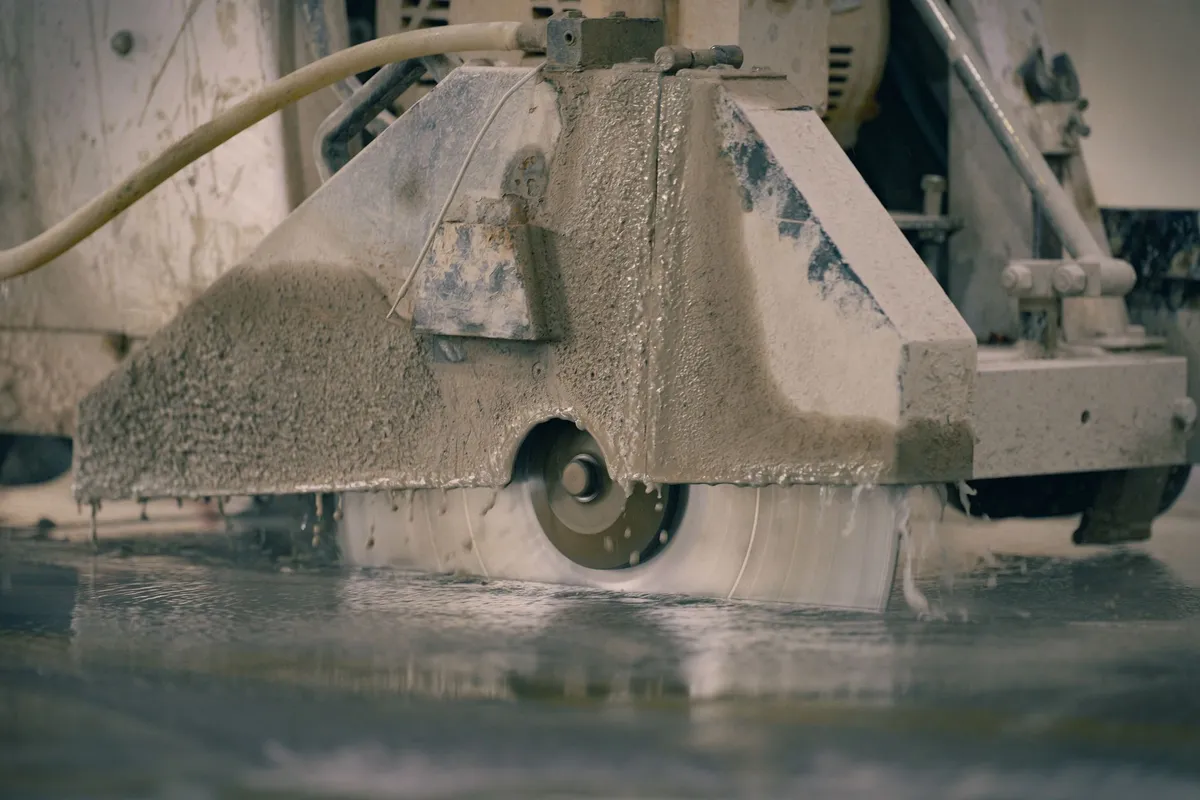
Once the scope is agreed upon, the physical process follows a fixed sequence that cannot be skipped or reordered without compromising the result. For a floor with moderate scratching and some surface etching, the typical progression runs like this: dry vacuuming, wet diamond honing starting at a coarser grit and moving through progressively finer grits, slurry removal between each pass, crystallization or polishing compound application, and finally sealer. Each stage builds on the one before it. Jumping from a 200-grit hone straight to polish leaves micro-scratches that become visible the moment light hits the floor at an angle.
Water management matters more than most customers anticipate. Honing granite produces a fine slurry of stone particles and water that spreads aggressively if not controlled. Technicians lay absorbent barriers at thresholds, work in contained sections, and extract slurry with wet vacuums before it migrates under baseboards or into grout lines. If you have a nearby area with carpet or wood flooring, that transition point gets extra attention. Customers in homes where the granite flows into adjacent rooms should expect some protective sheeting and a clear work boundary.
Countertop work follows a similar logic but involves more hand tooling around fixtures, backsplashes, and undermount sinks. Mechanical pads cannot reach tight corners, so technicians switch to hand-held tools for those areas. The finish has to match across the entire surface, which takes more time than customers expect when a kitchen has an island plus a perimeter run of counters.
The Part First-Time Customers Never See Coming
Dry time and cure time are different things, and confusing them causes problems. A freshly polished granite floor may feel dry to the touch within an hour. The sealer applied to it, however, needs 24 to 48 hours to fully cure before the surface should see foot traffic, wet mopping, or any cleaning product. Customers who put a coffee maker back on the countertop the same afternoon or walk across a sealed floor in street shoes before cure is complete can compromise the finish before they have had a chance to enjoy it.
The other surprise is maintenance. Restored granite is not maintenance-free granite. Acidic cleaners, including many common kitchen sprays, will etch a polished surface over time. AFC Floor Care recommends pH-neutral stone cleaners and resealing on a schedule that depends on traffic and use, typically every one to three years for floors and annually for kitchen countertops. Customers who skip resealing find themselves calling for restoration again sooner than necessary.
For properties across the Tampa, FL region, including homes in Palm Harbor near Curlew Rd and Tampa Rd, the combination of high humidity and hard water can accelerate surface dulling if the sealer is not maintained. That is a local condition worth knowing about, not a reason to avoid granite, but a reason to keep up with care.
Businesses and homeowners in areas like Lake Magdalene or Hunters Green who have large granite installations will find that the per-square-foot economics of professional restoration compare favorably to replacement once they price out new stone, fabrication, and installation.
AFC Floor Care serves the Tampa, FL area as a trusted local resource for stone floor and countertop restoration, with the experience to assess, hone, polish, and seal granite correctly the first time. For questions about your specific surfaces or to schedule an assessment, the team can be reached at 13106 Tifton Dr, Tampa, FL 33618, (813) 933-6049.
Frequently Asked Questions
How does the assessment process work before restoration begins?
The assessment involves checking the finish type, depth of scratches, presence of etching, and the condition of grout lines. This evaluation helps determine the specific steps needed for the job, ensuring the process is tailored to the surface’s requirements.
What can I expect in terms of costs for restoration services?
Pricing typically ranges from $3 to $8 per square foot, depending on the condition and finish requirements. Countertops may be priced by linear foot or as a flat project rate, so knowing your total surface area will help you prepare for the cost.
What should I do to prepare my space before the restoration work begins?
Clear the area of furniture and items to provide easy access for the technicians. Be sure to measure the space accurately, as customers often underestimate the total square footage that needs to be restored.
What are common mistakes to avoid during the restoration process?
A common mistake is confusing dry time with cure time; while the surface may feel dry within an hour, the sealer needs 24 to 48 hours to fully cure. Additionally, using acidic cleaners on restored surfaces can lead to etching, so it’s crucial to follow maintenance recommendations after the job is completed.
Get Directions to AFC Floor Care
🎧 Listen to this as a podcast
Also on Apple Podcasts, Spotify, and Amazon Music.